Understanding the Basics
As a Laravel developer and web consultant, I often encounter clients who are unsure whether to adopt an API-first or a traditional approach for their web applications. Both methodologies have their merits, and the choice largely depends on your project's requirements. In this article, I'll break down both approaches, their advantages, and when you might prefer one over the other.
What is API-First?
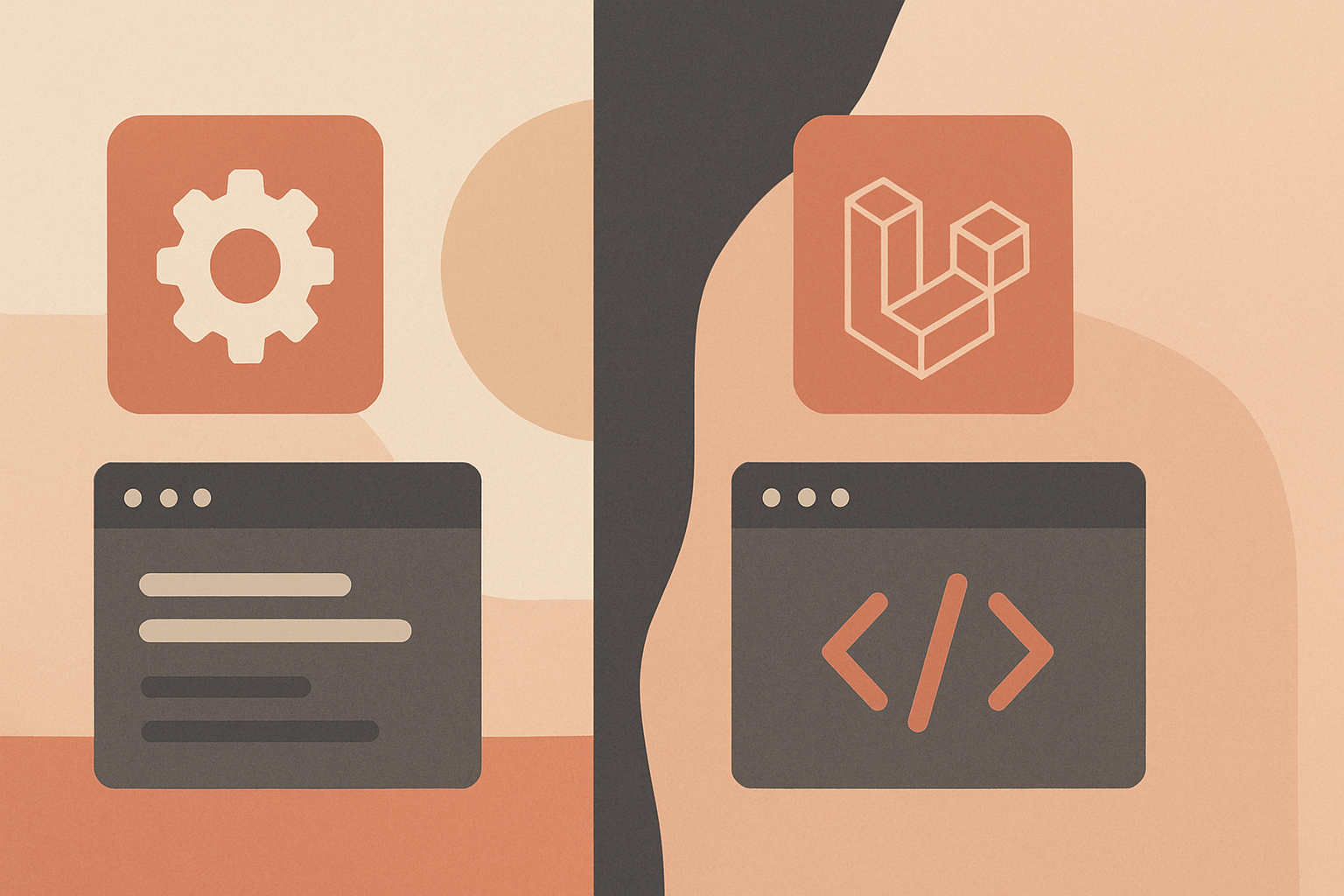
The API-first approach emphasises building an application around its API from the outset. This means that the API becomes the core of the application, driving all functionalities and interactions. In essence, you're developing the backend services first, allowing various client applications—be it a web app, mobile app, or even third-party services—to interact with your system through this API.
Benefits of API-First
- Flexibility: An API-first architecture allows for multiple frontends to be developed simultaneously. This is particularly useful if you plan to offer a mobile application alongside your web application.
- Scalability: As your business grows, you can easily expand or modify your API without affecting the client applications. This modularity can save significant time and resources in the long run.
- Third-Party Integrations: If you foresee needing to integrate with other services (like payment gateways or CRMs), an API-first approach simplifies these processes by providing a clear interface for interaction.
What is Traditional Laravel?
The traditional Laravel approach typically involves building both the backend and frontend as a monolithic application. In this case, your Laravel application handles HTTP requests, processes them, and returns views directly. This is often ideal for simpler projects or those with specific frontend requirements.
Benefits of Traditional Laravel
- Simplicity: Building a traditional Laravel application can be more straightforward, especially for small projects where a full API might be overkill.
- Speed of Development: For projects that require rapid development with minimal complexity, the traditional approach allows for quick turnaround times.
- Integrated Features: With Laravel's built-in features like Blade templating, you can easily manage views and controllers in one unified structure.
When to Choose API-First vs Traditional Laravel
Your choice between API-first and traditional Laravel should be guided by your project’s needs. Here are some scenarios to consider:
Choose API-First When:
- You need multiple frontends: If you're developing both web and mobile applications, an API-first approach is more efficient.
- Future integrations are anticipated: If you expect to integrate with third-party services or APIs, starting with an API-first architecture makes this easier.
- Scalability is a priority: If your application is expected to grow significantly, building an API-first system can save you from future headaches.
Choose Traditional Laravel When:
- Your project is small or simple: For straightforward applications, the traditional approach can be quicker and easier to manage.
- Rapid prototyping is required: If you need to get something up and running fast, a monolithic structure can be beneficial.
- You have specific frontend requirements: If your application relies heavily on server-side rendered views, traditional Laravel makes sense.
Conclusion
Deciding between an API-first and traditional Laravel approach ultimately depends on your project’s unique requirements. If you expect to scale, require flexibility, or plan to integrate with third-party services, an API-first approach may be the best fit. However, for simpler projects or quick prototypes, traditional Laravel can offer the speed and simplicity you need.
If you're still unsure about which approach to take, get in touch for a consultation, and let’s explore the best options for your business.


No comments yet. Be the first to comment.