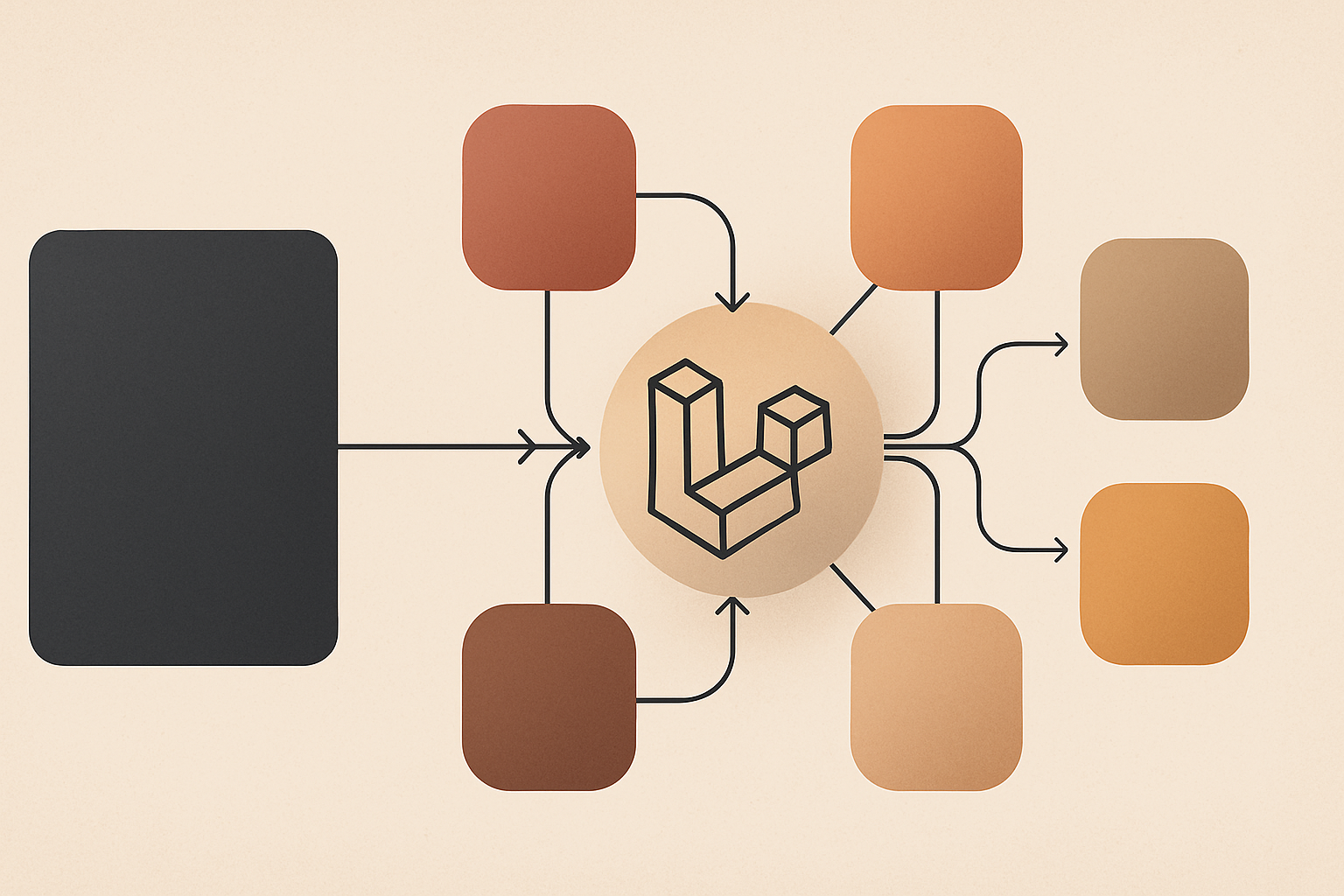
Understanding Microservices in Laravel
As a Laravel developer and consultant, I’ve seen many businesses struggle with the transition to microservices architecture. Microservices can improve scalability and maintainability, but they require a strategic approach for successful implementation. In this post, I’ll share five essential strategies that can help you as a UK small business owner effectively implement microservices in your Laravel applications.
1. Define Clear Boundaries
Before diving into coding, it’s vital to define the boundaries of your microservices. Each microservice should represent a specific business capability, ensuring that responsibilities are appropriately segregated. For example, if you run an e-commerce site, you might have separate services for user management, product catalog, and order processing. This clear delineation helps prevent overlap and ensures that each service can evolve independently.
2. Use API Gateway for Efficient Communication
Communication between microservices is typically handled through APIs. Implementing an API gateway allows you to manage requests and responses efficiently. The API gateway acts as a single entry point for clients, and it can handle requests to various microservices seamlessly.
For instance, if you have a service for handling payments and another for managing inventory, the API gateway will manage requests to these services without exposing clients to the internal complexity. Laravel, with its built-in routing and middleware, can simplify the creation of an API gateway.
3. Embrace Containerisation
Containerisation is a game-changer for deploying microservices. Tools like Docker allow you to package your microservices and their dependencies into containers, ensuring they run consistently across different environments. This approach simplifies deployment and scaling.
For example, if you develop a user authentication service, you can create a Docker container for it. When you need to scale your application, you simply spin up new containers without worrying about the underlying infrastructure.
4. Implement Service Discovery
As your application grows, managing multiple microservices can become complex. Service discovery helps automate the process of locating and connecting to various services. By implementing a service discovery mechanism, you can ensure that your microservices can find each other dynamically.
In a Laravel application, you can use tools like Consul or Eureka to facilitate service discovery. This way, if your order processing service changes its location or instance, other services will still be able to discover and communicate with it without manual intervention.
5. Monitor and Log Effectively
Finally, monitoring and logging are crucial for maintaining the health of your microservices. In a microservices architecture, issues can arise in various services, making it essential to have a robust monitoring solution in place.
Tools like Prometheus for monitoring and ELK stack for logging can help you track the performance of your microservices. For instance, with effective logging, if your payment service fails, you can quickly identify the problem and resolve it, minimising downtime and impact on your customers.
Conclusion
Implementing microservices in Laravel can significantly enhance your application’s scalability and maintainability. By defining clear boundaries, using an API gateway, embracing containerisation, implementing service discovery, and monitoring effectively, you can build a robust microservices architecture that meets your business needs.
If you’re considering transitioning to microservices or need assistance with your Laravel projects, get in touch to discuss how I can help your business thrive.



No comments yet. Be the first to comment.